




The short answer
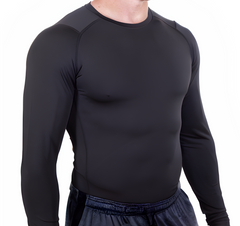
Yes — for what they're actually designed to do. A quality compression shirt flattens and smooths the chest and midsection immediately and for as long as you wear it, supports loose tissue, prevents skin-on-skin chafing, and gives constant postural feedback. What no compression shirt does is permanently change your body: it doesn't burn fat, remove skin, close muscle separation, or cure any condition. Companies that promise otherwise are the reason this product category has a credibility problem.
So the useful question isn't "do they work?" but "do they work for my situation?" Here's the honest map.
What compression genuinely does
- Immediate flattening and smoothing — firm, even pressure reshapes how your torso looks under clothes from the first wear. This is the core function and it is not subtle.
- Support — for gynecomastia, loose skin, or a heavy midsection, compression holds tissue steady so movement feels more comfortable and controlled.
- Friction elimination — a snug wicking layer stops the skin-on-skin rubbing behind most chafing.
- Postural feedback — constant gentle tension that reminds you to stand taller and engage your core.
- Confidence — the least measurable benefit and the one customers mention most.
Situation by situation
Gynecomastia and chest fat: the strongest use case — firm chest compression visibly flattens both glandular tissue and fat while worn. Start with our Original Compression Shirt, and see the product page FAQs for fit guidance. If your gynecomastia stems from Klinefelter syndrome, we've written a dedicated practical guide.
After weight loss: compression manages loose skin — support, chafing prevention, smoothing — while you maintain, rebuild, or consider surgery. Full guide: Loose skin after weight loss.
After gynecomastia surgery: your surgeon's medical vest comes first; everyday compression is for the transition once you're cleared. Guide: What to wear after gynecomastia surgery.
Posture: real feedback, not a magic exoskeleton — pair it with strengthening. Guide: Compression shirts and posture.
Chafing: a snug wicking base layer solves what loose cotton makes worse. Guide: A big man's guide to base layers.
Core and abdominal conditions: compression supports and smooths but never repairs — read the honest details for diastasis recti and, with your doctor involved, abdominal hernias.
Chest wall shape: for pectus carinatum, compression softens the contour under clothing; correction is medical. Guide: Pectus carinatum and everyday clothing.
Simple comfort: many men wear compression because firm, even pressure just feels good — there's a real phenomenon there: compression and sensory comfort.
Where to start
Firmest all-over: the Original. Dressier and softer: the EliteSlim. Everyday medium: the UltraSlim. Coolest: the Max Tank. Posture and sport: the Posture & Back Support Base Layer. Whatever you pick, order your measured size from the size guide — and exchanges are free.
FAQs
How long do the results last?
Exactly as long as you're wearing the shirt. Compression is a wearable result, not a body change — which also means it works the very first day, with nothing to wait for.
Will wearing compression weaken my muscles?
No — garment-level compression doesn't do your muscles' work for them, so there's nothing to weaken. (Rigid braces are a different story, which is one reason we favor fabric compression for posture.)
Is it obvious I'm wearing one?
No — low collars, flat seams, and thin breathable fabric are designed to disappear under everything from t-shirts to dress shirts, and orders ship in plain packaging.
What's the difference between cheap and quality compression shirts?
Mainly whether the compression is even and whether it lasts. Cheap shirts squeeze hardest at the seams and hems, dig in, ride up, and go slack within weeks of washing. Quality shirts distribute pressure evenly, stay anchored, and hold their elasticity — which is the entire product.


