




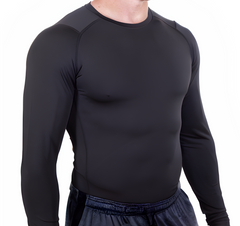

Understand the garment categories
When a surgeon mentions a snug athletic shirt after gynecomastia surgery, that does not mean every compression shirt is interchangeable. A surgical vest, an athletic base layer, and an everyday shaping undershirt serve different purposes.
Ask about the exact garment before switching. “Compression” on a product label does not establish that it provides the support your surgeon wants. Esteem belongs in the everyday shapewear category; our shirts are not substitutes for prescribed post-operative vests.
What does “switch to a snug athletic shirt” mean?
In a RealSelf discussion, Dr. Ronald Schuster describes sometimes using a fitted Nike or Under Armour shirt after his vest protocol, while saying that additional garment is not always necessary. Dr. William Andrade describes some patients wearing another close-fitting garment after the vest. These are examples of individual clinical plans, not endorsements of a particular retail shirt for every patient. Read the surgeons’ step-down discussion.
The practical question is therefore more specific than “Which brand is best?” Ask whether your surgeon means optional comfort, continued compression, a particular construction, or an approved substitute for the garment you currently use. Those answers determine what to look for.
Do not assume an athletic brand’s fitted, compression, and loose cuts are the same product. Likewise, two shaping undershirts may differ in neckline, sleeves, panel construction, and the way they feel around the torso. Show your team the exact product page or bring the garment to an appointment.
Surgical vest vs athletic shirt vs shapewear
The table describes common design features, not a verified pressure ranking. Construction varies by product. We do not assign medical pressure values or universal recovery weeks to any category.
| What to compare | Surgical support vest | Athletic compression shirt | Everyday shaping undershirt |
|---|---|---|---|
| Main purpose | Support selected as part of a clinician’s post-operative plan. | Close-fitting clothing for sport or active wear; features depend on the model. | Changing the appearance of the torso under everyday clothes while worn. |
| Construction | May have a front opening and adjustable fastenings; verify the prescribed design. | Often a pullover with short or long sleeves; check the actual product. | Tank or T-shirt styles, with different necklines and shaping panels. |
| How to choose | Use the garment and fit your surgical team specifies. | For post-operative use, confirm the exact shirt with your surgeon. | For everyday use, compare measurements, shaping level, and outfit. |
| What the name does not prove | That all surgical vests fit or function identically. | That a retail “compression” label meets a surgical requirement. | That a strong shaping sensation equals medical suitability. |
| Can it replace the prescribed vest? | Only the approved vest or alternative selected by your team. | Only if your surgeon specifically approves the change. | Esteem shirts do not replace a prescribed surgical vest. |
Front access can matter independently of tightness. Dr. J. Timothy Katzen describes using front zippers and adjustable shoulder fastenings to reduce overhead dressing movements and allow access for dressing changes. A pullover that feels similar once on may still be unsuitable for the way you need to dress. Read the discussion of garment openings.
Which garment should you wear at which week?
There is no category-by-week prescription here. For example, Dr. Daryl Hoffman describes reviewing patients roughly half a week to a week after surgery before a possible transition to a light compression shirt. In the same discussion, Dr. Joe Gryskiewicz describes a six-week garment recommendation. Your surgeon’s own examination and instructions resolve the difference for you. Compare the published duration answers.
If you hear “you can switch,” clarify whether that means all day, during certain activities, or only after a follow-up. Also ask whether the replacement is optional. Buying a stronger shirt than requested is not a way to add protection.
Take these five questions to your appointment
- Do I still need prescribed compression, or is an undershirt now optional?
- Is this exact product and size appropriate for me?
- Must the garment open at the front?
- What wearing and washing schedule should I follow?
- Which fit changes or symptoms mean I should contact you?
Where Esteem fits: everyday shaping
Once everyday shaping is appropriate, choose around your preferences rather than the idea that more tightness is always better. Consider whether you want a sleeveless layer under a dress shirt, a T-shirt-style undershirt, stronger chest shaping, or a lighter feel for ordinary wear.
Original
Our tightest style, designed for entire-body slimming with a particular focus on gynecomastia and chest compression.
View OriginalUltraSlim
A T-shirt style for medium everyday shaping, without the Original’s particular chest-compression focus.
View UltraSlimThese are descriptions within the Esteem range, not clinical compression classes. Choosing a shirt is not a treatment for gynecomastia, and a flatter appearance while wearing it should not be confused with changing breast tissue or a surgical result.

Questions before you buy
Is a firm shapewear shirt stronger than an athletic shirt?
There is no universal ranking across these categories. Size, cut, fabric, and panel construction all affect the sensation. “Firm” in our range does not specify a medical pressure measurement or prove equivalence to another brand’s garment.
My surgeon said Under Armour. Can I buy any fitted shirt?
Ask whether the instruction refers to a specific product or a type of fit. In a RealSelf question about choosing large or medium, Dr. Paul Vitenas favours a close fit without constriction and directs the patient back to their surgeon. Do not turn that answer into permission to select a different product unreviewed. Read the athletic-shirt sizing question.
Does the garment determine my final surgical shape?
Surgeons express differing views about compression’s role during healing. The discussion does not establish that an everyday retail shirt improves or preserves the result. Follow your own surgical plan rather than using marketing descriptions to make that decision. Read the final-shape discussion.
What if I just want something discreet for daily wear?
Compare the neckline with your outer shirt, check the armhole and sleeve arrangement, and test the fabric colour under your actual clothes. A light outer shirt can reveal an undershirt differently from a thicker polo. Our compression shirt vs tank top guide covers those everyday style choices.
Choose with a clear purpose
For ordinary shaping, start with your measurements and preferred style. For recovery, start with your surgeon’s garment instructions.
For more context, read our existing Under Armour compression-shirt overview. Product features vary, so check the specific model when comparing.
Written by Esteem Apparel. This educational comparison is not medical advice. Named surgeons and other brands do not endorse Esteem through the linked sources. RealSelf answers reflect individual clinical opinions. Illustrations are not actual product photographs.


