




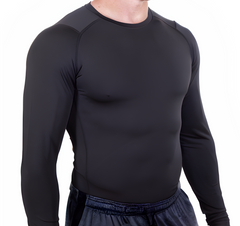

Comfort and garment care
A compression garment that rubs your nipples, presses on an incision, or feels uncomfortable at the waist needs attention. Start by identifying where and when the discomfort happens, rather than assuming a tighter shirt or longer wearing time will solve it.
After surgery, speak with your surgical team before changing garments or adding anything against an incision. Everyday care suggestions do not replace wound-care instructions. Esteem undershirts are everyday shaping garments, not prescribed surgical vests.
Why can a garment irritate the nipples?
In a RealSelf answer, Dr. Nelson Castillo explains that fabric folds and creases can create friction against the nipples. Dr. Larry Pollack notes that post-operative sensitivity can make garment contact more uncomfortable. Those possible explanations do not diagnose a rash, an incision problem, or persistent pain. Read the nipple-irritation discussion.
For an everyday undershirt, describe the contact point carefully. Does the discomfort occur at a seam, under the arm, along the hem, or across a broad area? Does it start immediately, when you sit, or after activity? These details help you discuss a fit issue without reducing everything to “I need another size.”
After surgery, share the same observations with the operating team. They can decide whether the problem concerns the garment, the healing skin, or something that requires an examination.
Check the garment before wearing it again
Inspect the inside
Lay the shirt flat and look along the seams, neckline, and armholes. Notice twisted fabric, a rough edge, loose stitching, or a fold that sits directly over the uncomfortable spot.
Check the position
Make sure the shirt is facing the right way and the hem is spread smoothly. If it repeatedly gathers, record where it happens instead of constantly pulling harder on the fabric.
Review the fit
Use the current size chart and check the style you bought. Stronger chest shaping and a lighter undershirt feel are different choices; discomfort is not an instruction to size down.
Check after laundering
Make sure the shirt is completely dry and inspect whether its shape or seams have changed. Follow its own label; a surgical vest may have different care requirements from an everyday shirt.
If an everyday shirt causes pain or skin irritation, stop wearing it and seek appropriate advice. Do not keep repeating a fit test on irritated skin. For an Esteem sizing concern, contact us through the Contact Us page or use our size-exchange form.

How should you wash and dry an Esteem shirt?
For Esteem everyday shirts, our wearing and washing instructions recommend cold or low-temperature washing and hang drying for best results. Avoid bleach and ironing. A low-temperature dryer may be used briefly as described in the guide, but hang drying is the preferred routine for maintaining shape and elasticity.
- Read the garment’s label first. Check that the instructions apply to the shirt you are washing, particularly if your wardrobe includes both retail shirts and prescribed garments.
- Inspect and prepare it. Look for damaged seams and remove the shirt from any outer clothing so it is washed according to its own requirements.
- Use the recommended washing setting. Avoid turning up the heat in an attempt to make a loose garment tighter.
- Let it dry fully. Plan drying time around your routine instead of putting on a damp garment because the next outfit is ready.
- Check it before reuse. If it has become misshapen or uncomfortable, reassess the garment rather than assuming the original size label guarantees the current fit.
A spare everyday shirt can make this routine easier: one can be drying while another is available. For prescribed post-operative wear, a spare needs to be the type and size your team approves. Two garments for rotation does not mean wearing two at once.
Can a surgical vest come off while it dries?
In a RealSelf question about the third post-operative week, Dr. Richard Zienowicz considered a couple of hours off acceptable and recommended air drying to avoid shrinkage. Your own removal schedule may differ. Ask the clinic how to wash the garment, how long it may be off, and whether to obtain a second approved one. Read the washing-break answers.
Putting on an everyday compression shirt without tugging
Esteem’s demonstration video shows the recommended step-in approach. This is for ordinary wear when you can move comfortably; it is not a post-operative dressing instruction.
- Orient the shirt so the front, back, and openings are clear before you begin.
- With support for balance if needed, step into the appropriate opening carefully.
- Work the fabric upward gradually using both hands rather than pulling sharply on one strap or seam.
- Position the straps, smooth the chest and torso fabric, and check the hem while standing and sitting.
Stop if dressing takes force or causes pain. After surgery, use the method and garment your team has approved. Front-opening designs may reduce the need for overhead movements, as Dr. J. Timothy Katzen explains. Read the discussion of dressing after surgery.
Common comfort questions
Can I wear a thin cotton layer underneath?
Some surgeons in a RealSelf discussion suggest a thin cotton layer for comfort. After surgery, ask your own team first: adding a layer changes what contacts the skin and how the garment sits. Do not place extra fabric, padding, tape, or creams over an incision without approval. Read the garment-sensitivity discussion.
Why does my stomach or lower back hurt when I lie down?
Dr. James Knoetgen identifies fit and garment positioning as possible contributors to discomfort, including bunching or pressure points. Persistent pain needs assessment rather than an assumption that the shirt is the only cause. Tell your surgeon if the discomfort is post-operative, and seek immediate help for significant abdominal pain or breathing problems. Read the stomach-and-back discomfort discussion.
Should I switch to a softer or lighter shirt?
For everyday wear, compare the style, seams, and fit once the irritation has been addressed. EliteSlim provides lighter shaping with a traditional undershirt feel; Max is a medium-compression tank. Neither is a treatment for irritation. After surgery, any switch requires your team’s approval.
Can I take short breaks if my nipples feel sore?
For an everyday shirt, do not continue wearing something that is irritating your skin. For prescribed compression, ask the surgical team about a permitted break or alternative garment rather than deciding on a new schedule yourself. The right response depends on your stage of care and the cause of the discomfort.
When is irritation more than a fit problem?
Increasing redness, warmth, discharge, or persistent significant pain after surgery should be assessed by a clinician. Dr. Knoetgen’s warning signs. ASPS advises immediate medical attention for post-operative chest pain, shortness of breath, or an unusual heartbeat. ASPS recovery guidance.
Can hot washing restore a shirt that has stretched?
Do not use heat as a resizing method. Follow the care label, recheck your measurements, and inspect the garment’s condition. If you need a different size, our sizing guide and exchange support are more useful than trying to shrink the shirt unpredictably.
Make everyday wear easier
Choose a comfortable fit and a care routine you can follow. For stronger chest-focused everyday shaping, compare Original; for a lighter feel, explore EliteSlim.
Written by Esteem Apparel for general education. Clinical links are individual RealSelf answers and ASPS patient information, not a diagnosis or an endorsement of Esteem. Ask your clinician about post-operative symptoms and garment changes. Artwork is illustrative.


