




General information, not medical advice. Structural spinal conditions like scoliosis or fixed kyphosis need assessment by a doctor or physical therapist — a shirt is not a treatment for either.
The honest version
Search "posture shirt" and you'll find plenty of products promising to pull your shoulders back and fix your posture for you. Let's be straight about what compression actually does, because the real mechanism is more interesting than the marketing one.
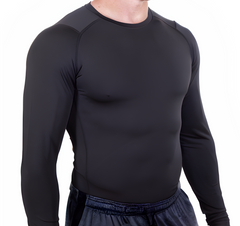
A compression shirt doesn't physically hold you upright — no comfortable garment can. What firm compression through the chest, upper back, and core provides is proprioceptive feedback: a constant, gentle awareness of where your torso is in space. When you start to slouch, you feel the fabric's tension change, and you correct yourself. Over a workday that's hundreds of small reminders — the same principle physical therapists use with posture taping. The correction still comes from your muscles; the shirt just keeps them switched on.
What that means in practice
- Desk posture: the rounded-shoulder, head-forward slump of long screen days is a habit problem more than a strength problem — and habit problems respond well to constant feedback.
- Standing taller: chest and upper-back compression encourages an open, upright carriage, which also happens to be how clothes fit best.
- Sport: in rotation-heavy sports like golf, a snug base layer helps you stay aware of torso position through the swing — which is exactly why we build a dedicated posture base layer.
- What it won't do: straighten a structural curve, replace strengthening exercise, or work while hanging in your wardrobe. Pair the feedback with basic upper-back and core strengthening and you get the real result.
Posture Corrector for Men: Where Compression Shirts Fit In
If you're looking for a posture corrector for men, it's useful to understand the difference between a compression shirt and a rigid posture brace. A compression shirt does not physically force the shoulders or spine into a fixed position. Instead, its close fit can provide a consistent reminder of torso and shoulder position while you work, walk, or exercise.
For everyday wear, some men prefer a compression base layer because it can be worn discreetly under normal clothing while also serving as an undershirt. The right option depends on what you need: posture awareness, chest compression, stomach support, or a combination of these features. For medical or structural posture concerns, a qualified healthcare professional should provide guidance rather than relying on a garment alone.
Which shirt?
The Posture & Back Support Base Layer is our dedicated option — built around upper-back and core support, popular with golfers and desk workers alike. If you want posture feedback plus chest and stomach shaping in one garment, the Original Compression Shirt runs firm across the entire upper body, and the EliteSlim gives gentler postural feedback in a dressier everyday shirt. As always, fit determines the feedback — use the size guide.
Posture FAQs
Do compression shirts really improve posture?
They provide continuous feedback that reminds you to correct your own posture, and most men notice they slouch less while wearing one. They don't force your body into position, and lasting change comes from combining that feedback with strengthening the muscles involved.
Compression shirt or posture brace — which is better?
Rigid braces pull the shoulders back mechanically, which can feel effective but lets your muscles switch off, and most people find them hard to wear for long. A compression shirt is comfortable enough for all-day wear and keeps your own muscles doing the work — a better long-term habit-builder for everyday slouching. Genuine spinal conditions are brace-and-doctor territory, not shirt territory.
How long until I notice a difference?
The feedback effect starts the first day — you'll catch yourself slouching and correcting. Changes in your default, unassisted posture depend on the habit and strengthening work you do alongside it, typically over weeks to months.
Can I wear it during sport?
Yes — our posture base layer was designed with golfers in mind, and works for any low-to-moderate-impact activity where torso awareness helps. It doubles as a regular moisture-wicking base layer.


