





For a lot of boys, puberty already feels like your body changing without asking permission first. Voice, height, skin, hair, weight, mood — all of it can shift fast. So when breast tissue starts developing too, it can feel confusing, embarrassing, and isolating. Many teenagers immediately assume something is wrong with them. Usually, it is not.
Gynecomastia in teenagers is very common. In most cases, it is a normal part of puberty caused by changing hormone levels, and it often improves on its own over time. That does not mean the experience feels minor while it is happening. For a teen, something temporary can still feel huge if it affects sports, locker rooms, swimming, photos, or just getting dressed in the morning.
How common it is
Teenage gynecomastia is much more common than most families realize. During puberty, breast enlargement happens in a large share of boys, and many sources estimate that roughly half of adolescent boys experience it to some degree. That alone is worth saying clearly: if this is happening, your son is not unusual, and he is definitely not the only one.
It can affect one side or both, and it does not always look dramatic. Sometimes it is just puffiness around the nipples. Sometimes it feels like a firm disc under the nipple. Sometimes it is more visible in certain shirts than others. Because boys rarely talk about it openly, many teenagers assume they are the only one in school dealing with it, when in reality they are part of a very common puberty pattern.
Why puberty causes it
Puberty gynecomastia usually happens because hormone levels are shifting. During adolescence, estrogen and testosterone are both active in the body, and small imbalances during that process can stimulate breast tissue growth. That sounds alarming when you first hear it, but in teenage cases it is often part of normal development rather than a sign of something dangerous.
It can show up as tenderness, puffiness, or a small rubbery lump under the nipple. One side can look bigger than the other, which is also common and does not automatically mean anything serious. In some cases, weight gain can make the chest look fuller too, which is why people sometimes confuse gynecomastia with chest fat. If you want to understand that difference better, read Gynecomastia vs Chest Fat.
How long it typically lasts
The reassuring part is that teenage gynecomastia often goes away on its own. In many boys, it improves within months and resolves within one to two years as puberty settles down. Some medical sources note that most pubertal cases improve without treatment, which is why doctors often recommend observation first rather than rushing into surgery or medication.
That waiting period can still feel long when you are 13, 15, or 17 and dealing with it every day. But “temporary” in medical terms does not always feel temporary in real life. That is why support matters. The best approach is usually two-track: give the body time, while also helping the teen feel more comfortable and less self-conscious in the meantime.
What helps meanwhile
Even when the underlying issue is likely to improve on its own, the day-to-day experience still deserves attention. Clothing can help a lot. Thicker fabrics, darker colors, patterns, and better shirt fit often reduce how noticeable the chest looks. Oversized clothes are not always the answer; they can sometimes make the area look bigger or make it obvious that the teen is trying to hide.
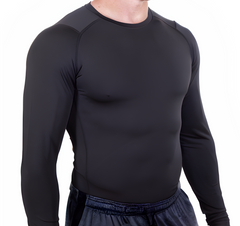
For some young men, a compression shirt can also help under regular clothes by flattening the chest and helping outer layers hang more smoothly. If the goal is the strongest chest-specific flattening, the Original Compression Shirt is the most direct option. If you want broader clothing strategies too, read How to Hide Gynecomastia.
It also helps when adults around the teen do not minimize the experience. Saying “it is no big deal” may be medically true, but emotionally it often lands badly. A better message is: “This is common, it usually gets better, and we are going to help you get through it.” That combination of reassurance and respect matters more than people think.
When to see a doctor
Although pubertal gynecomastia is usually normal, there are times when it is worth getting checked. See a doctor if the breast tissue is rapidly enlarging, very painful, only on one side in a way that seems unusual, associated with nipple discharge, or still present well after puberty without improvement. A medical visit also makes sense if the teen simply wants clarity and peace of mind.
Sometimes reassurance from a parent is not enough, but reassurance from a doctor is. That checkup can also help rule out less common causes, including medication effects, hormone issues, or other conditions that deserve attention. And if the emotional impact is severe, that matters too. Distress is a valid reason to bring it up.
A note for parents
If you are the parent reading this, your reaction matters. Even if the condition is temporary, the embarrassment can be very real. Teasing, dismissing it, or acting uncomfortable yourself can make the experience much worse. What helps most is calm support: listen, acknowledge that it is hard, avoid jokes, and let your son know he is not abnormal.
It also helps to focus on practical support instead of panic. Help him find clothes that make him feel more comfortable. Be thoughtful about things like locker rooms, beach trips, and sports uniforms. If he seems withdrawn, ashamed, or unusually anxious, take that seriously. Sometimes the physical issue is mild, but the emotional burden is not.
Teenage gynecomastia is common, usually temporary, and often hardest because of how exposed and self-conscious it can make a young person feel. Reassurance, better clothing strategies, and time are enough for most cases. If it is persistent, painful, or emotionally overwhelming, bring in a doctor sooner rather than later.
This article is for general information and is not medical advice. If a teenager has new, painful, rapidly changing, or one-sided breast enlargement, or if there is discharge from the nipple, seek medical evaluation.


