



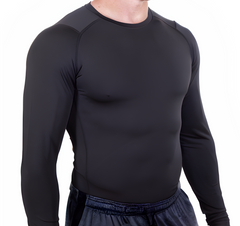

Getting the right size in a compression shirt matters more than most men expect. If the shirt is too loose, it will not flatten the chest or smooth the torso the way it should. If it is too tight, it becomes uncomfortable, harder to wear all day, and more likely to end up in a drawer instead of in rotation.
The right fit sits in the middle: snug, supportive, and noticeably compressive without feeling painful or restrictive. That is the sweet spot. A good compression shirt should help your outer clothes hang better, stay in place as you move, and feel wearable for real life, not just for the first five minutes after you pull it on.
How to measure chest and torso
The chest is the most important measurement for a compression shirt. Use a soft measuring tape and wrap it around the fullest part of your chest, keeping the tape level all the way around and breathing normally. Do not puff your chest out, and do not pull the tape so tight that it digs into the skin. You want an honest measurement, not your “best case” one.
If you are choosing between multiple styles, it also helps to note your torso length and general build. Men with a longer torso often do better in shirts with more length because shorter garments are more likely to roll up. For long-sleeve styles, it is also worth thinking about shoulder and arm comfort, especially if you lift, golf, or have a broader upper body.
If you want Esteem’s general fit and care guidance, use the wearing and washing instructions page as your reference point.
Snug vs. painful: the feel test
A compression shirt should feel tight enough that you notice support right away, but not so tight that you feel trapped in it. Once it is on, you should be able to sit, drive, bend, breathe deeply, and raise your arms without pain or restriction. “Firm” is correct. “I cannot wait to take this off” is not.
Here is a simple test: put the shirt on and wear it for 10 to 15 minutes. Move around normally. If it stays anchored, feels evenly compressive, and does not pinch or cut into one area, you are in the right zone. If you feel numbness, sharp seam pressure, major rolling, or shortness of breath, the size is wrong or the style is too aggressive for your body and use case.
When to size down
Most men should start with their normal size unless they are clearly between sizes and specifically want maximum compression. Sizing down can work well when your goal is the firmest possible flattening and you already know you tolerate compression well. But tighter is not automatically better.
If you are new to compression shirts, plan to wear one all day, or care just as much about comfort as flattening, your normal size is usually the smarter place to start. If you are between sizes, think in terms of priority: size down for maximum effect, stay true to size for easier all-day wear. That is the most useful rule of thumb for almost everyone.
Fit notes per product
The Original Compression Shirt is the best starting point if your main concern is chest flattening. It should feel firm across the chest without feeling painful through the ribs or shoulders. Shop it here: Original Compression Shirt.
The Max Tank is for men who want strong smoothing with less heat and less sleeve visibility. It should feel secure through the chest and midsection while staying easier to tolerate in hot weather. Shop it here: Max Tank.
UltraSlim is the lighter, more budget-friendly option for men who want moderate daily shaping rather than the strongest compression possible. It should feel supportive, not aggressive. Shop it here: UltraSlim.
EliteSlim is the more refined everyday undershirt option for men who want shaping with a slightly dressier, softer feel. It should sit smoothly under work shirts and polos without feeling bulky. Shop it here: EliteSlim.
Core Tight long-sleeve adds sleeve coverage and is a better fit for training, cooler weather, or men who prefer more upper-body coverage. Pay extra attention to shoulder comfort and sleeve pull when sizing this one. Shop it here: Core Tight long-sleeve.
Care so it keeps compressing
Compression fabric only works well if it is cared for properly. Heat is one of the fastest ways to wear out stretch fibers, which means a shirt that once felt supportive can become loose and less effective sooner than expected. That is why cold washing and air drying matter.
Use the care guidance on Esteem’s wearing and washing instructions page, and avoid treating compression shirts like regular heavyweight tees. If you wear them often, rotating between two or three shirts also helps preserve the life of each garment.
Exchanges
If the size feels wrong after trying it on, deal with it early instead of hoping the fit will somehow improve. The wrong size usually stays the wrong size. A shirt that is too loose will not suddenly compress better, and one that is painfully tight will not become your favorite daily layer.
For sizing-related changes, use Esteem Apparel’s size exchanges page. Getting the size right is worth the extra step because once the fit is dialed in, the shirt becomes much easier to wear consistently.
A compression shirt should help you forget about your chest more, not think about the garment all day. Measure honestly, choose based on how you actually plan to wear it, and remember the core rule: snug, not painful. That is how you get the fit right the first time.


