



The Esteem Journal • Clothing & confidence
New fit. Familiar you.
Significant weight loss can change your wardrobe in ways a smaller shirt size does not fully explain. If you are navigating loose skin after GLP-1 weight loss, a thoughtful base layer and a few fit adjustments can help you feel more at ease in everyday clothes.
This guide explains where compression can help, what it cannot change, and how to choose support without sacrificing comfort.

By Esteem Apparel • October 23, 2026 • Approx. 10-minute read. Product models illustrate clothing and garment fit; their medical history or weight-loss experience is not implied.
The short answer: Compression shirts can help loose skin look smoother and feel more held in under clothing while worn. They do not tighten skin permanently, reverse skin stretching, remove excess tissue or improve the effects of a weight-loss medicine.
Understanding the change
Why can loose skin remain after significant weight loss?
When body volume decreases substantially, excess skin can remain. You might notice it around the lower abdomen, chest, sides, arms or thighs. Loose skin is not proof that your weight-loss efforts failed, and it is not something a smaller clothing label automatically solves.
Johns Hopkins Medicine explains that significant weight loss through lifestyle changes, medicines or bariatric surgery can leave excess skin that affects clothing fit and everyday comfort. If folds are causing persistent soreness, rashes or difficulties with daily activities, a healthcare professional can assess them.
From a wardrobe perspective, the first question is simpler: what would make getting dressed easier today? Perhaps a shirt catches around your stomach when you sit. Perhaps you want more support through your chest under a polo. Or perhaps the clothes you wore before weight loss now have excess fabric in the shoulders and waist, while a smaller size feels too clingy in one place.
Those are different fit problems. A shaping layer may help the outline beneath clothing, but tailoring, a different cut or a change of outer fabric can matter just as much. The goal is an outfit that works for your current body, rather than an obligation to hide every contour.
After GLP-1 weight loss
Does weight loss with GLP-1 medicines need a different clothing approach?
If you have lost significant weight with a GLP-1 medicine, the practical clothing approach is much the same as after other routes to weight loss: assess your current shape, choose coverage where you want it, and recheck your measurements as your fit changes. You do not need a special medical-category undershirt simply because medication was part of the process.
“GLP” is often used as shorthand online, but GLP-1 is the more precise term. Semaglutide is a GLP-1 receptor agonist, while tirzepatide is a dual GIP/GLP-1 receptor agonist. For how prescription weight-management medicines work, see the NIDDK patient overview. Medication selection and treatment decisions belong with your prescriber.
Loose skin after weight loss should not automatically be described as medication damage. For this guide, the relevant change is the loss of body volume and the clothing questions that follow it. A compression shirt does not treat medication side effects, replace medical follow-up or prevent excess skin from developing.
If your weight is still changing: buy for the fit you need now. A single well-chosen undershirt gives you a chance to learn your preferred firmness before buying several. Revisit the size chart when the garment’s fit changes, rather than using a fixed number of pounds lost as a rule.
Smoothing versus skin tightening
What compression changes—and what it leaves unchanged
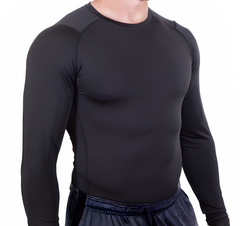
A regular undershirt provides a fabric layer. A shaping compression shirt fits more closely and applies pressure through the areas it covers. This can help hold softer contours nearer to the torso and give your outer shirt a more even surface to drape over. Some people also prefer the feeling of having a supportive layer around the chest and stomach.
That effect is temporary. When you take the garment off, the skin has not been removed or permanently tightened. If you are searching for “how to tighten loose skin after weight loss,” it helps to separate looking smoother in clothes today from changing the skin itself.
A shirt may help with
- A smoother outline beneath a T-shirt or polo.
- A held-in feeling across the covered chest and torso.
- A more consistent base under your chosen outfit.
- Personal confidence when you prefer additional coverage.
A shirt cannot promise
- Permanent skin tightening or excess-skin removal.
- Fat loss, muscle gain or a smaller body after removal.
- Complete concealment of every fold through every fabric.
- Treatment for painful skin, a medical condition or surgery recovery.
Be cautious about comparing yourself with photographs. Lighting, pose, outer clothing and garment size can all affect the appearance of a silhouette. The product images here help explain shirt shapes and coverage; they are not clinical comparisons or documented outcomes in people who have lost weight.
For medical options, the American Academy of Dermatology’s skin-tightening overview explains that results and suitability differ by treatment. A clinical assessment is the place to discuss changing the skin itself; buying tighter clothing is not a substitute.
Start with the area you want supported
Chest
Compare the chest panel, neckline and armholes. A close fit may smooth the appearance beneath clothing, but pressure should never feel like the price of wearing your outfit.
Stomach and sides
Check the entire torso, not just the chest. The layer should lie evenly under your outer shirt without collecting into a tight band at the waist.
Below the hem
A shirt cannot support skin outside its coverage. If a lower fold sits below the hem, a tighter chest panel will not solve the coverage mismatch.
Test length while seated. A hem that reaches the right place when standing may move when you bend or sit. Repeated rolling, digging or the need to keep pulling the garment down is a reason to reassess the size and cut. Do not assume that doubling up compression shirts will fix it.
The wardrobe reset
Seven steps to a more comfortable outfit after weight loss
1. Choose one real outfit to improve
Start with the clothes you reach for most often: your work polo, a favourite tee or a button-down for dinner. Solving one everyday outfit is more useful than buying a whole new wardrobe based only on a mirror check in an undershirt. Notice where the fabric catches, gathers or feels uncomfortable.
2. Take fresh measurements
Measure according to the chart for the exact garment you are considering. Keep the tape level and avoid pulling it tight to compress skin. Use body measurements, including body waist where requested, rather than the number on your trousers. Height or weight can provide context, but neither replaces the relevant measurements.
3. Choose firmness you actually want to wear
Extra-firm shaping and a softer-feeling base layer are different preferences. Start from your comfort, the amount of coverage and how you intend to dress. A shirt you can comfortably put on, sit in and move in is more useful than one you avoid because it is overly restrictive. Never size down as a shortcut to stronger results.
4. Check necklines, sleeves and colour
A sleeveless tank avoids an extra sleeve under your outer shirt, but its straps and neckline still need to work with your collar. A short-sleeve undershirt gives different coverage and may be more familiar. Light and thin outer fabrics can reveal colour contrast, seams and hems, so check them in daylight instead of assuming any option will be invisible.
5. Give the outer fabric room to fall
A shaping layer does not require a skin-tight outer shirt. Try a tee with a little structure, a polo that skims the torso, or a button-down with enough room through the middle. If shoulders and sleeves are now too large, a better-fitting outer size or tailoring may improve the overall look more than choosing firmer compression.
6. Sit, reach and walk
Spend a few minutes moving as you normally would. Sit with your usual trousers and belt, reach for something at shoulder height and walk around. Look for bunching, a rising hem or an uncomfortable waistband. Adjust the combination rather than judging the outfit only from a still, front-facing pose.
7. Recheck as your body and clothes change
Use fit as the cue to reassess. If your undershirt begins to feel loose or your usual clothes hang differently, take new measurements before ordering again. Keep notes on the style, size and outer-shirt combinations you like. That gives you a practical starting point the next time you need a comfortable outfit.
Putting the guide into practice
How Esteem Apparel’s four styles compare
Esteem’s range lets you choose between different degrees of shaping and different garment shapes. These comparisons describe the products’ intended feel; they are not medical compression measurements or evidence of a particular result for GLP-1 users.


Original: when firmer torso shaping is the priority
Original is the firmest option in this comparison. Consider it when you want extra-firm chest shaping with compression extending through the torso. Its sleeveless construction fits a different wardrobe preference from a short-sleeve base layer. Be especially careful to follow the size guide, because this is a very tight style.
Max Tank: a less tight sleeveless alternative
Max offers chest and torso shaping with a less tight feel than Original. Consider it for casual layering when you prefer a tank shape. Check the shoulder width, armholes and collar under your chosen outer shirt; these small details can decide which sleeveless style feels most natural to you.
EliteSlim: targeted shaping with a softer feel
EliteSlim pairs chest and core shaping with a softer everyday feel. It is a sleeveless choice to compare for workwear and regular layering. If you want support but find a very firm shirt distracting, this is a different option to consider rather than forcing yourself into the tightest style.
UltraSlim: a familiar short-sleeve layer
UltraSlim offers medium overall smoothing through a short-sleeve shirt. Choose it when that familiar shape suits your outfit and preferences. It does not offer the same extra-firm chest panel as Original, and sleeve hems may show through a very thin outer shirt.
For all four styles, choose the larger size when measurements conflict or land at a shared size boundary. See the current Sizing & Fit Guide rather than carrying over an old size automatically. Our compression shirts after GLP-1 and significant weight loss page brings the photographed options and fit checklist together.
Know when to change the plan
Comfort, skin care and medical support
A garment should not cause pain, numbness, restricted breathing or skin irritation. Remove it if it does. Everyday shaping is for waking wear, not sleeping. Cleveland Clinic advises choosing the right size, keeping shapewear clean and taking a break if it irritates the skin.
Follow the garment’s care label and our wearing and washing guide, and allow it to dry fully before wearing it again. Do not use more compression to cover persistent soreness or broken skin. Seek advice about recurring rashes, wounds or skin problems that interfere with daily life.
After surgery, use the garment and wear schedule your surgical team recommends. An everyday shaping shirt is not interchangeable with prescribed postoperative compression. If you are considering a procedure to address excess skin, discuss the available options and their risks with an appropriately qualified clinician.
Frequently asked questions
Can compression shirts prevent loose skin while I lose weight?
No prevention claim is supported here. A shaping shirt changes the outline under clothing while you wear it; it does not guarantee how your skin will respond to weight loss. Choose it for current comfort and clothing fit.
How much smoother will my stomach look?
There is no honest universal percentage or number of inches to promise. The result depends on your contours, coverage, garment size and outer fabric. Start with one shirt and assess the combination in the clothes you intend to wear.
Is loose chest skin the same as gynecomastia?
Not necessarily. A change in chest appearance can have different causes, and clothing cannot diagnose them. If you notice a new lump, pain or another concerning change, seek medical advice. A shirt may help the appearance under clothing without identifying or treating the cause.
Should I buy a size smaller because I have lost weight?
Only if your current measurements indicate that size on the relevant chart. The amount you have lost, an old T-shirt size or the desire for stronger shaping is not enough to select a new size. Do not deliberately undersize.
Can I wear my usual shirt while continuing a GLP-1 prescription?
The useful clothing questions are whether it still fits, feels comfortable and covers the area you want supported. A prescription alone does not determine garment suitability. Ask your clinician about any individual restriction or symptoms.
What if I like my body but still want support?
That is a perfectly valid reason to choose a base layer. You do not need to dislike your body to enjoy a particular fit or silhouette. Wear the clothes that help you feel comfortable, and skip shaping on days you do not want it.
Make the next outfit easier.
Start with one outfit, your current measurements and a comfortable level of support. A smoother line can be useful; feeling at ease in the clothes you wear is the more practical test.
Keep reading: Compression shirts for loose skin: buying guide · How tight should a compression shirt be? · Size exchanges and returns
Editorial note: This article is written by Esteem Apparel, a seller of compression clothing. It is general clothing information, not a medical assessment or an independently tested product comparison. Linked medical sources support the background information and do not endorse our products. Sources reviewed October 23, 2026.


