




The Esteem Journal • The layering guide
A white shirt.
A better base layer.
A neckline showing through. Fabric gathering at your waist. Buttons pulling when you sit. The right undershirt starts with the detail you want to improve.
Compare a regular cotton undershirt with a shaping layer, then try our simple fit test in your own dress shirt.

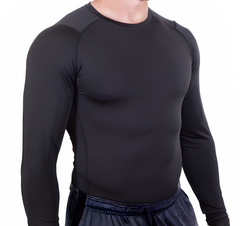
By Esteem Apparel • October 23, 2026 • Approx. 8-minute read. This is a try-at-home fit guide, not a report of a controlled wear trial. The hero and flat-lay images are AI-generated illustrations, not product-performance evidence.
The short answer: Start with a lightweight, close-fitting cotton undershirt if you want a simple comfort layer without shaping. Consider compression if you want chest or torso smoothing while worn. For either option, check colour contrast, neckline, seams and comfort under your actual white shirt. More compression does not automatically mean less visibility.
01 / Understand the difference
Cotton is a fabric. Compression is a fit.
These are not two mutually exclusive materials. Cotton undershirts can contain stretch fibres, and compression garments can use different fabric blends. Here, “cotton” means a regular, non-shaping cotton or cotton-rich undershirt; “compression” means a garment designed to fit closely and shape the chest or torso.
A regular cotton undershirt adds coverage and a layer between you and your dress shirt. A shaping undershirt adds support and may create a smoother outline while you wear it. Neither can guarantee an invisible finish under every white fabric.

| What matters | Regular cotton undershirt | Compression undershirt |
|---|---|---|
| Main purpose | A familiar base layer with coverage and no deliberate shaping. | Close support and a smoother chest or torso outline while worn. |
| Bulk | A fitted, lightweight cut can sit neatly. A loose everyday T-shirt may gather at the waist. | A close cut can reduce loose fabric, but thicker panels and edges may still show. |
| Under white | Colour, collar and sleeve hems can be visible. | The same checks apply, plus any shaping-panel boundaries. |
| Comfort | Usually the starting point if you prefer a relaxed, non-compressive feel. | A snugger feel; choose the intended size and assess it while sitting and moving. |
| Warmth & sweat | Judge the actual weight, coverage and how it feels when damp. | Compression alone tells you nothing about cooling, wicking or sweat protection. |
| Best reason to choose it | You like the fit of your outer shirt and want an uncomplicated layer. | You want shaping as well as a base layer, and the full outfit passes your comfort check. |
This table compares garment purposes and fit considerations. It is not a measured ranking of cooling, sweat absorption or shaping performance.
02 / Make the layer less noticeable
Start with contrast, then check the edges.
White is not always the least visible.
A shade close to your own skin tone is worth trying beneath a sheer white shirt. Bright white can create a visible boundary where the undershirt ends. Grey may work for some combinations, but it is not a universal answer.
ALBERT KREUZ’s layering guide also highlights the contrast between skin and undershirt. Compare in daylight rather than choosing from the colour name alone.
Match your usual collar opening.
If you wear the top buttons open, check whether a V-neck or lower neckline stays below that opening. With a tie, a higher neckline may be covered, but its outline can still show through the fabric.
Bend forward and turn sideways as well as looking straight ahead. A neckline that hides in a still pose may appear when you move.
The dress shirt is half the equation.
A thin white shirt reveals more of the layer beneath it. Proper Cloth notes that thinner broadcloth and poplin can be more sheer than thicker pinpoint and twill fabrics, and that short-sleeve edges can be visible when a jacket comes off. A more opaque outer shirt may solve a visibility problem more effectively than a tighter undershirt.
Give the dress shirt room to skim your body. If the button placket pulls or opens when you sit, reassess the outer shirt’s size or cut. Compression is not a reliable fix for a dress shirt that is too small.
03 / Test your actual outfit
The cotton vs compression fit test
Use the same dress shirt, trousers, belt, lighting and collar opening for both options. Choose each undershirt in its correct size. If the colours or necklines differ, note that too: you are comparing two outfits, not isolating the effect of compression.
1. Check visibility in two types of light.
Stand near a window, then under your usual indoor lighting. Look for a colour block across the torso or a clear line where the undershirt ends. For an event, also take a normal phone photo with the lighting you expect. Keep the camera position and exposure consistent when comparing.
2. Inspect the neckline and sleeve edges.
Open your collar as you normally wear it. Check the front, side and back. With short sleeves, look for a line around the upper arm. With a tank, check the armhole and shoulder edges. Sleeveless means less sleeve fabric, not automatically less show-through.
3. Look at the shirt’s drape.
Smooth both layers once and tuck them normally. Notice loose undershirt folds at the waist, panel lines across the chest and pulling between buttons. A little natural movement in a dress shirt is normal. You do not need to remove every crease for an outfit to look good.
4. Sit, reach and walk.
Sit at a desk, reach to shoulder height and walk around. Then check the hem and waistband again. If the undershirt rolls or bunches, review its size, length and the trousers’ rise. Do not assume that a smaller size will hold it in place better.
5. Give comfort time to count.
Try the outfit at home for long enough to notice warmth, pressure and the urge to adjust it. A brief mirror check cannot predict a full workday. Stop if the fit is uncomfortable; do not trade comfortable breathing or movement for a sharper-looking photograph.
Your outfit checklist
Tick these after trying each option. These boxes are for your own review and are not saved or submitted.
How to choose: If both look equally neat, choose the feel you prefer. If cotton meets your needs, extra shaping is optional. If compression improves the outline you want and stays comfortable, it may be the better layer for that outfit. If neither passes, try a different colour, neckline or dress-shirt fabric.
04 / If you want shaping
Which Esteem style should you compare?
Start with the level of support and garment shape you want. These descriptions reflect our range’s intended fit; visibility still depends on your dress shirt, colour choice and size.

EliteSlim
Sleeveless, with targeted chest and core shaping. A starting point for workwear when you want support with a softer feel than Original.
Explore EliteSlim
UltraSlim
Medium overall smoothing in a T-shirt shape. Compare it when you like sleeve coverage, then check those sleeve hems under your white shirt.
Explore UltraSlimOriginal
Our firmest option, with an extra-firm double-layer chest panel and torso compression. It is sleeveless, with mesh shoulder coverage. Choose it for firmer shaping, then check panel edges beneath thin white fabric.
Explore OriginalMax Tank
A less tight sleeveless alternative to Original, focused on chest and upper-torso shaping. Compare its neckline and armhole edges as carefully as you would a short-sleeve undershirt.
Explore MaxUse the relevant style’s Sizing & Fit Guide and current body measurements. Do not deliberately size down for extra shaping. When measurements conflict or sit at a shared boundary, choose the larger size. Check the live product page for available colours; the taupe garment in the illustrative flat lay is not an Esteem colour offer.
05 / The details people ask about
White dress shirt undershirt FAQs
Is cotton or compression better under a white dress shirt?
Cotton is a useful starting point for a simple non-shaping layer. Compression is worth comparing when you also want a smoother outline. Neither wins on invisibility by category alone: use your own shirt to check colour, edges, drape and comfort.
Will a white undershirt disappear under a white shirt?
Not necessarily. It can show as a brighter area against your skin, especially where the sleeves or neckline end. Compare a shade close to your skin tone when available, and consider a more opaque dress shirt.
Is a tank top less visible than a short-sleeve undershirt?
A tank removes the sleeve-hem line but introduces armhole and shoulder edges. Which is more discreet depends on the dress shirt and the two garments’ actual cuts. Check both with your jacket off.
Does compression stop sweat marks?
Do not assume so. Shaping, moisture handling and sweat barriers are separate features. Check the garment’s stated construction and coverage. A sleeveless tank does not place fabric under the armpits in the same way as a sleeved undershirt.
Should I wear a V-neck with an open collar?
A V-neck can help keep the undershirt below the opening, but the depth needs to match how many buttons you leave undone. Check while bending and turning, not just standing still.
Can compression fix a dress shirt that pulls between the buttons?
It may change the outline beneath the shirt, but it cannot guarantee a comfortable fit in an outer shirt that is too small. Compare a roomier cut or tailoring, especially if pulling appears when you sit.
Choose the layer you can forget about.
The best undershirt for your white dress shirt is the one that gives you the coverage or shaping you want, stays discreet enough for the occasion and feels comfortable as you move through the day.
Keep reading: Best Men’s Shapewear Under a Suit or Dress Shirt · Wearing & washing your undershirt
Editorial note: Written by Esteem Apparel, a seller of compression clothing. No controlled cotton-versus-compression wear test was conducted for this article. The fit-test steps are a practical self-check, not measured product results. Product photographs are identified separately from AI-generated editorial illustrations. External sources support the specific layering guidance linked above and do not endorse Esteem products. Reviewed October 23, 2026.


