


Getting dressed for work, a wedding, or an evening out is easier when your clothes suit both your body and the occasion. The label size is a starting point. Fit, fabric, and comfort tell you more when you try the outfit on.
Start with three fit checks
Shoulders
For a conventionally fitted shirt or jacket, look at where the shoulder seam sits and how the garment moves when you reach forward. A dropped-shoulder design will sit differently by intention. Shoulder fit is useful to check early, but it is not the only measurement that matters.
Chest and waist
Button the garment, sit down, and move your arms. Look for pulling, restricted movement, or more loose fabric than you prefer. If one size fits your shoulders but strains across the chest or waist, try another cut as well as another size.
Length and sleeves
Try the shirt as you plan to wear it—tucked or untucked—and check the sleeve length with your arms relaxed and bent. For a jacket, compare its length with your trousers and the proportions you like.
Ask what a tailor can realistically change
Some sleeve, hem, or waist adjustments can be straightforward. Others depend on the garment’s construction, available seam allowance, pockets, lining, and fabric. Shoulder changes can be complex. Ask for an assessment and price before buying a garment that needs work; alterations are not always possible or inexpensive.
Compare fabric while standing and sitting
Fabric weight and structure influence how a garment hangs, but there is no single material everyone should wear. Compare a crisp woven shirt, a textured overshirt, and a softer knit. Check how each feels against your skin, moves with you, and works in the temperature you expect.
Matte, textured, smooth, and patterned fabrics create different effects. Choose what you enjoy rather than treating a colour, stripe, or chest pocket as automatically off limits.
Build an outfit for the occasion
- Office: start with the dress code, comfortable movement, and a shirt or jacket you can wear through a normal day.
- Wedding or event: try the complete outfit together, including shoes and the layers underneath, before the date.
- Dinner or everyday plans: a shirt, knit, or overshirt can feel put together without requiring formal tailoring.
Check the layer underneath
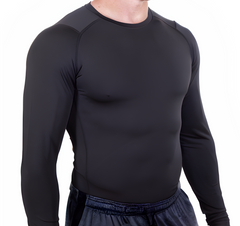
If you wear an undershirt, compare its neckline, colour, and sleeve coverage with the outer garment. A compression base layer can help create a smoother line, but visibility and comfort depend on the complete outfit. No shirt is invisible under every fabric or neckline.
EliteSlim offers a lighter compression feel. Max provides medium compression, while Original is our firmest chest-compression option. Use the style-specific sizing guide instead of assuming every style fits identically.
A useful fitting-room checklist
- Can I sit, reach, and move comfortably?
- Do the buttons and seams sit as I want them to?
- Does the fabric feel right for the occasion and weather?
- Do the neckline and layers work together?
- If it needs altering, have I checked what is practical?
Your clothes do not need to make your body look like someone else’s. A useful outfit is one you enjoy wearing and can get on with your day in.
Questions about an Esteem style? Contact us for fit help, or read the return and size exchange terms.


