




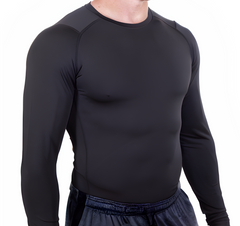

The undershirt is the most overlooked garment in a man's wardrobe. Most men buy whatever three-pack their father bought, wear it until it yellows, and never think about the fact that the layer touching their skin all day determines how every other shirt looks, feels, and smells. This guide covers the whole category properly: the styles, the fabrics, the fit rules that stop an undershirt from showing, and the situations where a compression undershirt beats a regular one. We manufacture compression undershirts, so we will tell you plainly where regular cotton is the right answer and where it is not.
What an undershirt is actually for
A good undershirt does four jobs: it absorbs sweat before it reaches your outer shirt, it protects dress shirts from deodorant and body oils so they last longer, it smooths the layer under fitted clothing, and it adds warmth in cold months. A bad undershirt does the opposite: it shows through, bunches at the waist, adds bulk, and traps heat. Every choice below is about maximizing the first list and avoiding the second.
The three styles, and when each wins
Crew neck
The classic round collar. Best under casual T-shirts, polos, sweaters, and any outfit where the undershirt collar will never be visible. Avoid it under a dress shirt with an open collar, where the crew neckline sits in plain view, which is the most common undershirt mistake in office settings.
V-neck
The neckline dips below an open dress shirt collar, making it invisible with the top one or two buttons undone. The default for business and business-casual wear. Make sure the V is deep enough for how many buttons you actually leave open.
Tank top
Maximum breathability and zero sleeve lines, with the tradeoff of no underarm sweat protection. Best in hot climates, under short sleeves where a T-shirt sleeve would peek out, and for men who mainly want torso coverage and smoothing rather than sweat management.
Fabric: the decision that matters most
Cotton is soft, cheap, and familiar, and it holds sweat against your body once saturated. Fine for mild climates and low-sweat days, poor for summer, commutes, and nerves-heavy meetings.
Modal and micromodal blends are softer than cotton, drape thinner, and resist yellowing, which is why most premium undershirt brands use them. A meaningful upgrade for dress wear.
Synthetic performance blends (nylon, polyester, spandex) wick moisture and dry fast, which keeps you feeling dry rather than damp. This is also the fabric family that makes compression possible, since compression requires substantial spandex content that cotton cannot deliver.
Merino wool regulates temperature across seasons and resists odor remarkably well, at a premium price and with more delicate care.
Fit rules that stop an undershirt from showing
Whatever style you choose: it should fit close to the body with no billowing fabric, be long enough to stay tucked through a full day of sitting and reaching, have flat seams and no chest pocket, and in terms of color, match your skin tone rather than your shirt. This surprises people, but under a white dress shirt, a heather gray or skin-tone undershirt disappears while a bright white one shows as an obvious outline. White undershirts belong under opaque and colored shirts, not thin white ones.
When a compression undershirt beats a regular one
Here is the honest segmentation. A regular soft undershirt is the right choice if you are lean, mainly want sweat protection, and prioritize maximum softness. A compression undershirt is the better tool in five specific situations.
Chest fullness. If you deal with gynecomastia or chest fat, a regular undershirt does nothing and a clingy athletic shirt makes it worse. Purpose-built chest compression flattens the area under every outer shirt. This is our specialty, and our gynecomastia guide and chest fat guide cover it in depth.
Belly smoothing. A firm compression undershirt holds the stomach so button-downs stop gapping and knits stop clinging. The Ultra slimming shirt is built for exactly this, with our strongest hold from chest through lower abdomen.
Loose skin after weight loss. Compression stops the movement, folding, and chafing that regular undershirts ignore. Full details in our compression shirts for loose skin buying guide.
Chafing and skin-on-skin friction. Bigger men and athletes get a smooth wicking barrier that ends underarm and chest chafing, a topic we covered in our big man's guide to base layers.
Confidence days. Presentations, dates, weddings, photos. Plenty of our customers wear regular undershirts most days and compression when it counts.
One warning about the category: "compression" on a sportswear label means light muscle-support stretch, not smoothing. If your goal is a flatter look, you need shapewear-grade compression like our Original compression shirt, which has held its Extra Tight standard for ten years and 20,000+ five-star reviews across platforms.
How many, and how to make them last
A working rotation is 5 to 7 regular undershirts if you wear one daily, or 2 to 3 compression shirts rotated so each rests between wears. Wash after every wear, cold water, and skip the dryer for anything with spandex, since heat is what kills stretch fabric. Replace regular undershirts when they yellow, thin, or lose shape, typically every 6 to 12 months of regular use, and compression shirts when the hold noticeably softens. Our wearing and washing guide covers the details.
Quick recommendations by situation
- Office, open collar: V-neck in heather gray or skin tone, modal or performance fabric. Compression V-neck if smoothing matters.
- Under T-shirts and polos: crew neck, fitted. Compression crew if chest or belly is the concern.
- Hot climates: tank or performance crew, never cotton. Browse tanks in the collection.
- Winter: long sleeve performance or merino base layer.
- Chest fullness, belly, or loose skin: the Original or Ultra, sized to your current measurements.
Frequently asked questions
What is the best undershirt for men?
It depends on the job. For everyday dress wear, a fitted V-neck in modal or a performance blend, in heather gray or skin tone. For sweat, a wicking synthetic. For smoothing the chest or stomach, a shapewear-grade compression undershirt. The best undershirt is the one matched to the outfit and the goal, which is why most men should own two types.
Should an undershirt be tight or loose?
Close-fitting but not restrictive for regular undershirts: it should follow your torso without billowing, since loose fabric bunches and shows. Compression undershirts should be genuinely snug with firm, even pressure, which is the point, while still allowing full breathing and reach.
What color undershirt is invisible under a white shirt?
Heather gray or a shade close to your skin tone. A white undershirt under a thin white dress shirt creates a visible outline because it contrasts with your skin, while gray and skin tones blend. Save white undershirts for colored and opaque shirts.
Do undershirts stop sweat from showing?
A good one absorbs or wicks moderate sweat before it reaches your outer shirt, which handles most days. Heavy sweaters should choose performance fabrics that spread and dry moisture rather than cotton, which saturates and clings.
What is the difference between a compression shirt and a regular undershirt?
A regular undershirt is a soft passive layer for sweat and comfort. A compression undershirt uses firm elastic fabric to actively smooth and flatten the chest and stomach, changing how outer clothing fits. Athletic "compression" sits in between and is designed for muscle support, not smoothing.
Can you wear a compression shirt as an undershirt every day?
Yes. Quality compression undershirts are designed for all-day wear and function as normal undershirts, wicking sweat and protecting outer shirts while also smoothing. Most men adjust to the firm feel within a week and rotate two or three.
How often should you replace undershirts?
Regular cotton or modal undershirts, every 6 to 12 months of frequent wear or when they yellow and lose shape. Compression undershirts, when the hold noticeably softens, which with cold washing and air drying typically takes many months of rotation wear.
The bottom line
Own two kinds: a soft wicking undershirt matched to your outfits for ordinary days, and a genuine compression undershirt for the days and the concerns where smoothing matters. If the second category is why you are reading, start with the Original compression shirt or compare styles in the men's shapewear collection, with sizing help and a 30-day free return guarantee making the first order risk free.


