




General information, not medical advice. If chafed skin is broken, weeping, or shows signs of infection, see a doctor or pharmacist.
Why bigger men chafe — and why it's not a hygiene problem
Chafing is pure mechanics: skin rubbing against skin or fabric, thousands of times an hour, with sweat as the accelerant. For bigger and taller men the friction points are predictable — under the arms, along the chest, under the pecs, around the waistband, and anywhere skin folds meet. Warm weather, long days on your feet, and cotton shirts that soak up sweat and turn to sandpaper all make it worse. It has nothing to do with cleanliness and everything to do with friction, moisture, and repetition.
The fix is a base layer, not a bigger shirt
Sizing up in loose cotton feels intuitive, but loose fabric moves more, holds more sweat against you, and bunches at exactly the spots that rub. The reliable fix is the opposite: a snug, smooth, moisture-wicking layer against the skin that stops skin-on-skin contact entirely and gives outer clothing a low-friction surface to slide over.
- Skin separation: a fitted layer keeps chest and underarm skin from rubbing together — the root cause, eliminated.
- Moisture control: wicking fabric moves sweat away instead of holding it in a soggy layer like cotton does.
- Flat seams matter: a base layer with raised stitching just relocates the problem; flat-lock seams rub nowhere.
- Coverage where you need it: if your worst spots are the underarms and chest sides, choose sleeves over a tank so fabric sits in the friction zone.
Which Esteem layer for chafing?
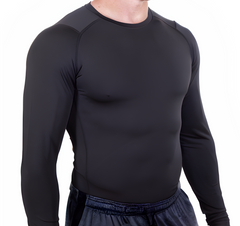
For underarm and chest chafing, the UltraSlim is the everyday pick — a t-shirt-style undershirt with medium compression, smooth flat seams, and full coverage through the friction zones. For maximum hold that also controls loose skin, step up to the Original Compression Shirt. If your chafing is mainly torso and waistband rather than underarm, the sleeveless Max Compression Tank runs coolest of the three. All are cut for bigger and taller men up to 3XL — see the size guide.
Chafing FAQs
Won't a tight shirt make chafing worse?
No — the opposite. Chafing comes from movement and friction, and a snug wicking layer barely moves against the skin, while loose fabric rubs constantly. Tight-and-smooth beats loose-and-damp every time. The exception is a garment with rough seams or one so small it digs in; fit should be snug, not straining.
What about anti-chafe balms and powders?
They work, but they're a two-hour solution to an all-day problem — they wear off, and reapplying at work isn't practical. Use them as a top-up for extreme heat or long events, with a base layer doing the everyday work.
Can I wear a compression base layer every day?
Yes — that's what they're designed for. Rotate two or three shirts and wash after each wear so the fabric keeps wicking properly; sweat and oils gradually clog a fabric that's worn repeatedly between washes.
How do I treat skin that's already chafed?
Clean it gently, dry thoroughly, and give it a day or two protected from further rubbing — a soft barrier cream helps. If skin is broken, weeping, or increasingly painful rather than settling, have a pharmacist or doctor look at it before returning to normal layers.


