



Esteem fit guide
A compression shirt should feel close and supportive without making normal breathing, sitting, or movement uncomfortable. Buying the smallest size you can squeeze into is not a useful fit test.
Everyday shaping and surgical compression need different decisions. For everyday wear, use the garment’s size chart and check comfort in the positions you actually wear it. After surgery, your operating team chooses the garment, fit, and wearing schedule. Esteem shirts are everyday shaping garments, not replacements for prescribed surgical vests.
What should a well-fitting compression shirt feel like?
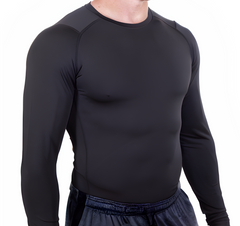
Think of an undershirt that stays close to your torso, with the fabric distributed smoothly across your chest and stomach. It should not need constant pulling at the neck, armholes, or hem. A strong shaping style can feel substantially firmer than a regular cotton shirt, but discomfort is not proof that it is working.
When trying an everyday shirt, check it before adding your outer layer. Smooth out twisted fabric, sit in a chair, and move naturally. Then try the dress shirt, polo, or T-shirt you plan to wear over it. Judge both comfort and the appearance under that actual outfit—not just the outline of the undershirt in a mirror.
Everyday fit
Choose the recommended size for your measurements. Look for even coverage, a neckline that works with your clothes, and a hem that stays comfortable when you sit.
Post-surgery fit
Have the surgical team assess the garment. Do not translate retail descriptions such as “extra tight” into a medical pressure level or choose a smaller size to increase pressure.
In a RealSelf discussion about wearing two vests, Dr. Miguel Delgado describes a fit that is close without discomfort, while Dr. Jerome Edelstein specifically cautions against restricting breathing. Dr. John Nguyen warns that excessive compression can damage skin. These are individual clinical answers, not a universal sizing formula. Read the surgeons’ responses on compression tightness.

Five reasons to reassess the fit
- Breathing feels restricted. Do not continue wearing an everyday shirt that makes it difficult to breathe. After surgery, shortness of breath or chest pain needs immediate medical attention. ASPS recovery guidance.
- You notice numbness, tingling, or a change in skin colour. These are reasons to seek advice rather than increase tightness. Dr. James Knoetgen identifies them as concerning signs in a discussion of post-operative athletic shirts. Read the fit discussion.
- A seam or edge digs into one spot. Check whether the fabric is twisted or folded. Persistent painful impressions deserve attention; do not use the depth of a mark as a measure of useful compression.
- The hem repeatedly rolls or gathers. Check the size, torso length, and position. A rolled hem tells you to reassess how the shirt sits; it does not, by itself, prove that the shirt is too small or too large.
- Sitting or lying down causes pain. A standing mirror check can miss this. For post-operative stomach or back discomfort, Dr. Mathew Plant recommends having the surgeon assess whether the vest is too tight. Read the discomfort question and response.
For an everyday purchase, note exactly where the problem occurs before requesting help: neckline, underarm, chest, stomach, or hem. Include the style and size you tried. That is more useful than describing the entire shirt as “too tight.” Our contact page and size-exchange page can help with an Esteem order; medical symptoms belong with a healthcare professional.
My garment became loose. Should I wear two?
Do not add a second garment simply to create more pressure after surgery. In the tightness discussion, Dr. Edelstein explains that a change in fit should be reviewed with the surgeon, who may recommend a replacement garment. Less tightness is not an instruction to improvise a new compression setup. Read the discussion about a loosening vest.
For everyday shirts, first compare the current fit with the original fit. Has your measurement changed? Is one area stretched while another still feels firm? Does a freshly washed and fully dried shirt sit differently? Check the care label and inspect the seams. Choose a new size or replacement based on the current measurements and garment condition, not the assumption that doubling up will solve the problem.
Choose the compression style before chasing a smaller size
Different Esteem styles offer different everyday shaping experiences. If one feels stronger than you want, changing style may be more useful than repeatedly adjusting the size.
- Original: our tightest fit for entire-body slimming, with a particular focus on gynecomastia and chest compression.
- Max: medium compression in a sporty tank style for overall body slimming.
- EliteSlim: lighter compression and a more traditional, breathable undershirt feel.
- UltraSlim: a T-shirt style with medium everyday shaping, rather than a specific focus on chest compression.
Use the current Esteem sizing guide for measurements and compare the style descriptions before ordering. “Firm” and “light” describe our range; they are not pressure prescriptions.
Common tightness questions
Should I deliberately size down for a flatter chest?
For everyday Esteem wear, start with the size chart. A smaller size is not automatically a better-looking or more wearable option. If your priority is chest shaping, compare the Original style in your recommended size before treating downsizing as the solution.
Can I use a two-finger test to know the fit is safe?
There is no universal finger-gap rule in this guide. Fabric stretch, garment construction, and the part of the body you test all differ. After surgery, ask your team to demonstrate the fit they want on your actual garment.
How do I put an everyday compression shirt on?
Follow our wearing instructions and demonstration video. For the recommended step-in method, orient the shirt correctly, step into it carefully with support for balance, pull it upward gradually with both hands, then position the straps and smooth the fabric. Stop if it takes force or causes pain. This is not a substitute for your surgeon’s dressing instructions.
Does a strong compression shirt replace a surgical vest?
No. Strength of sensation does not establish medical suitability. See our surgical vest, athletic shirt, and shapewear comparison for the differences and the questions to ask before changing garments.
Find your everyday fit
Compare your measurements, preferred shaping level, and the clothes you want to wear over the shirt.
Written by Esteem Apparel for general education. Linked RealSelf answers are individual clinicians’ opinions about specific questions; they are not a clinical guideline or an endorsement of Esteem. Medical concerns require advice from your own clinician. Artwork is illustrative.


