



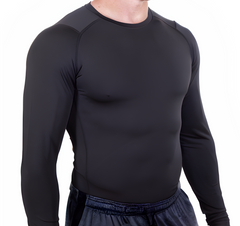

If you've started researching compression shirts for gynecomastia, you've probably already noticed how many options are out there — and how confusing it can be to know which one will actually work. The market has grown significantly in recent years, and while that means more choices, it also means more products that overpromise and underdeliver. Most men buying their first gynecomastia shirt make the same mistakes: they buy something too generic, too loose, or not designed for the specific challenge of flattening male chest tissue.
This guide is designed to fix that. Whether you're buying for the first time or you've already tried a compression shirt that didn't deliver, here's exactly what to look for — and why each factor matters.
Why Most Men Buy the Wrong Shirt First
The most common mistake is buying a standard athletic compression shirt from a mainstream sportswear brand and expecting it to work for gynecomastia. These shirts are engineered for a completely different purpose — supporting muscle during exertion, improving blood circulation, and reducing fatigue during physical performance. They compress the entire torso evenly, and while they might feel snug, they simply don't apply the targeted, firm pressure required to flatten glandular or fatty chest tissue.
The second most common mistake is buying based on price alone. Very inexpensive compression shirts — typically under $20 — are usually made from thin, low-elasticity fabrics that won't maintain compression throughout the day. They might feel tight when you first put them on, but after an hour of normal movement they begin to shift, stretch out, and lose their effectiveness.
To get real results from a gynecomastia compression shirt, you need to understand what specifically makes one designed for this purpose — and what doesn't.
Feature 1: Targeted Chest Compression Zone
This is the single most important feature, and it's what separates a true gynecomastia garment from a generic compression tee. A purpose-built gynecomastia shirt incorporates a reinforced chest panel — an area of denser, firmer, more structured fabric specifically over the chest that applies greater pressure there than the rest of the garment.
When you're shopping online, look for product descriptions that explicitly reference terms like "chest compression panel," "reinforced chest zone," or specific language about gynecomastia. If the shirt is described only as a "slim fit compression tee" or "athletic undershirt" without any gynecomastia-specific design mention, it's almost certainly not what you need.
When handling the shirt physically, you should be able to feel the difference in the chest area versus the rest of the garment. The chest panel should feel noticeably stiffer and more resistant when you stretch it with your hands. If the fabric feels identical everywhere, the shirt applies uniform compression — useful for athletics, not ideal for gynecomastia.
Feature 2: Seamless or Flat-Lock Stitching
You're wearing this shirt under your daily clothing — under a dress shirt at the office, under a t-shirt on weekends, under a blazer at social events. In that context, any visible seam lines, bulky edges, or structural ridges will telegraph through your outer clothing and defeat the entire purpose of the garment.
The best gynecomastia shirts use one of two construction methods:
Seamless knit construction — the shirt is literally knit in a tube shape with no side seams at all, producing a completely smooth surface around the entire torso.
Flat-lock stitching at all edges — seams are sewn flat against the body rather than creating a raised ridge. This keeps the shirt invisible even under thin fabrics and in bright lighting.
Run your fingers along the chest panel and around the sides of any shirt you're considering. If you feel prominent raised seams or thick edges, that structure will be visible under fitted shirts. Look for a smooth, even surface across the entire garment.
Feature 3: Fabric Composition and Breathability
The material your compression shirt is made from matters enormously — both for compression effectiveness and for all-day wearability.
The best fabrics for gynecomastia compression shirts combine:
-
Nylon or polyester (70–85%) — These synthetic fibers provide structure, durability, and compression memory. They hold their shape under pressure and through repeated washing without stretching out or losing elasticity.
-
Spandex/elastane (15–30%) — The stretch component that allows the shirt to conform to your body while maintaining consistent compression. Higher spandex percentages generally mean better recovery (the fabric snapping back to shape after being stretched).
-
Moisture-wicking treatment or finish — Draws perspiration away from the skin and promotes evaporation, keeping you cool and dry throughout the day.
What to avoid: cotton-dominant fabrics. Cotton absorbs moisture, loses its shape when wet, and becomes heavy and uncomfortable during extended wear. A 100% cotton "tight shirt" might feel like compression in the morning, but by mid-afternoon it'll be a stretched, damp undershirt that's doing nothing for your chest profile.
Feature 4: Adequate Torso Length
A compression shirt that rides up out of your waistband throughout the day is one of the most frustrating experiences a man can have while trying to manage gynecomastia discreetly. It disrupts your focus, requires constant adjustment, and can cause the shirt to bunch visibly under your outer clothing.
Look for shirts with a torso length that sits comfortably below your natural waist — ideally reaching to or slightly below the hip bone. Some gynecomastia-specific shirts feature a slightly extended back hem to ensure the shirt stays tucked during normal daily movement, including sitting, reaching overhead, and bending.
When checking sizing, always verify the length dimension alongside the chest and waist measurements. A shirt might fit perfectly in the chest but be too short for your torso proportions.
Feature 5: Brand Specialization
There's a meaningful and often overlooked difference between a compression shirt produced by a large general sportswear or apparel brand as one SKU among thousands, and a compression shirt made by a brand that exists specifically to serve men dealing with gynecomastia and body image challenges.
Specialized brands understand the problem at a deeper level. They've developed their products based on direct customer feedback from men managing gynecomastia. They understand the balance between effective compression and daily wearability. They know what "invisible under a dress shirt" actually requires in practice versus theory. Their sizing charts are calibrated for men who need compression rather than for general athletic builds.
Esteem Apparel was founded specifically for this purpose. Since 2016, every product they've made has been built around the needs of men dealing with gynecomastia and body confidence — not as an accessory product line, but as the entire identity of the brand. That focus makes a real difference in product quality, fit accuracy, and customer satisfaction.
Feature 6: Getting Your Size Right
Sizing is where many men either get remarkable results or complete disappointment from a compression shirt — and the difference is often just one size.
Here's how to size correctly:
-
Measure your chest at the fullest point — usually across the nipple line. Keep the tape measure level and snug but not tight.
-
Measure your waist at the narrowest point, typically about an inch above the navel.
-
Cross-reference both measurements with the brand's specific size chart — don't assume your shirt size translates directly.
-
If between sizes, size down — a slightly smaller size will provide noticeably more chest compression and better results.
-
The fit test: Once you have the shirt on, you should be able to take a full, deep breath without feeling like the shirt is restricting your lungs. You should be able to raise both arms fully overhead without the hem pulling up out of your waistband. If either of those isn't possible, size up.
A shirt that's too large provides almost no compression benefit. A shirt that's dangerously tight can restrict circulation and breathing. The right size sits firmly in the middle — noticeably compressive on the chest, comfortable throughout the torso, and wearable for a full day without distress.
Feature 7: Durability and Washability
A gynecomastia compression shirt that you wear most days needs to withstand regular washing without degrading. The compression properties of a shirt are directly tied to the integrity of the spandex/elastane fibers — once those break down, the shirt stops working.
When evaluating a shirt's durability, look for:
-
Machine washable — ideally on a gentle/delicate cycle with cold water
-
Air dry or tumble dry low — high heat degrades elastic fibers faster than anything else
-
Manufacturer's wash guidance — quality brands provide specific care instructions because they've tested what preserves the garment's performance
Avoid ironing compression shirts directly over the chest panel, and never use bleach or fabric softener, which break down elastic fibers over time.
The Full Checklist at a Glance
Before you buy any gynecomastia compression shirt, run through this quick checklist:
-
✅ Does it have a reinforced, targeted chest compression panel?
-
✅ Is it seamless or flat-lock stitched?
-
✅ Is it made from a breathable synthetic blend with spandex?
-
✅ Is the torso length long enough to stay tucked?
-
✅ Is it made by a brand that specializes in gynecomastia?
-
✅ Does your size correspond to the brand's actual size chart?
-
✅ Is it machine washable and designed for repeated daily use?
If a shirt passes all seven criteria, you've found a product worth trying. Esteem Apparel's compression shirts are engineered to meet every one of these standards — and have been trusted by men managing gynecomastia since 2016.


