





Surgery is often presented as the definitive solution to gynecomastia — and for severe cases, it can be. But the reality is that gynecomastia surgery (mastectomy or liposuction) involves significant cost, recovery time, and medical risk. It also isn't covered by most insurance plans when performed for cosmetic reasons. For the vast majority of men, especially those with mild to moderate gynecomastia, surgery isn't the first step — and it doesn't need to be.
Thousands of men successfully manage gynecomastia every day without any medical intervention at all. Here's a comprehensive guide to every non-surgical approach available — from immediate solutions you can use today to longer-term lifestyle strategies.
Why Men Want to Avoid Surgery
Before diving into solutions, it's worth acknowledging why hiding gynecomastia without surgery is such an important topic. The reasons are practical:
-
Surgery for gynecomastia typically costs between $3,000 and $8,000 out of pocket
-
Recovery takes 2–6 weeks with physical restrictions
-
There are risks including scarring, asymmetry, and anesthesia complications
-
Results are not guaranteed to be permanent, especially if hormonal causes aren't addressed
-
Many men simply aren't ready for a surgical procedure for a cosmetic concern
Non-surgical options let you address the appearance of gynecomastia on your own terms — immediately, affordably, and without any downtime.
Solution 1: Wear a Gynecomastia Compression Shirt
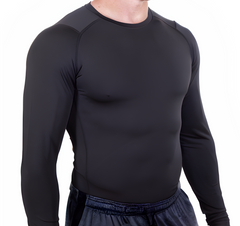
This is the single most effective non-surgical solution available, and it works from the very first time you put it on. A compression shirt designed for gynecomastia applies firm, targeted pressure across the chest, physically flattening breast tissue and creating a smooth chest profile under clothing.
The effect is immediate and dramatic. Most men describe their first experience wearing a purpose-built gynecomastia compression shirt as a revelation — suddenly, fitted shirts feel wearable, social events feel less stressful, and that constant background anxiety about how they look disappears.
Solution 2: Strategic Clothing Choices
The right clothing can dramatically reduce the visibility of gynecomastia even without shapewear. Here's what works:
Wear darker colors. Dark shirts — navy, charcoal, black, deep burgundy — absorb light and minimize the visibility of chest contour. Light colors and especially white shirts reflect light and make chest protrusion far more visible.
Choose structured fabrics. Stiff, woven fabrics like Oxford cloth, denim, or structured linen don't cling to your body the way soft knits do. A structured button-down shirt sits away from the chest rather than conforming to its shape.
Embrace light layering. An open overshirt, a lightweight jacket, or a casual blazer adds a visual layer that breaks up the chest silhouette. This doesn't mean wearing heavy layers in summer — a simple linen overshirt works perfectly.
Avoid clingy fabrics. Thin cotton jersey, rayon, and stretch fabrics conform to your body's shape. In the context of gynecomastia, this means they show everything. Stick to fabrics with more structure or body.
Wear patterns strategically. Busy patterns — checks, plaids, textured weaves — draw the eye away from specific body areas. Solid, smooth fabrics draw attention directly to your chest contour.
Solution 3: Posture Correction
This one surprises most men. Slouching — shoulders forward, chest caved in — actually makes gynecomastia significantly more visible. When your shoulders round forward, your chest tissue is pushed outward and downward, making it more prominent.
Standing tall, pulling your shoulders back, and lifting your chest creates a completely different appearance. Upper chest prominence is reduced, the overall silhouette looks flatter, and you simply project more confidence and authority.
Interestingly, many gynecomastia compression shirts also provide mild posture support as a secondary benefit, gently encouraging better shoulder position throughout the day.
Solution 4: Exercise and Targeted Fitness
While exercise cannot remove glandular gynecomastia tissue, it can significantly reduce the visual impact of the condition in several ways:
Build upper pectoral muscle. Incline press exercises and upper chest movements build the upper pec shelf, which changes the overall shape of the chest and makes breast tissue less prominent relative to overall chest development.
Reduce overall body fat. If your gynecomastia has a significant pseudogynecomastia (fat-based) component, losing body fat through diet and exercise will reduce chest size. Even with a glandular component, reduced surrounding fat makes the condition less prominent.
Develop shoulder and back width. Broader shoulders and a wider back create a V-taper that draws attention away from the chest and makes the entire upper body look more balanced and angular.
Solution 5: Dietary and Lifestyle Adjustments
Hormonal imbalances — particularly elevated estrogen relative to testosterone — can contribute to gynecomastia. While dietary changes alone rarely eliminate the condition, certain adjustments may help:
-
Reduce alcohol consumption (alcohol is processed into estrogen-like compounds)
-
Avoid soy-heavy diets (phytoestrogens in soy may influence hormonal balance)
-
Prioritize sleep (testosterone production peaks during deep sleep)
-
Reduce exposure to endocrine disruptors found in certain plastics and personal care products
-
Consult a doctor if you're taking medications known to cause gynecomastia, such as certain antidepressants, blood pressure medications, or anabolic steroids
The Fastest Non-Surgical Solution
If you need results today — not months from now — a compression shirt is the answer. You can put one on this morning and walk out the door looking and feeling completely different. No recovery time, no procedure, no cost beyond the garment itself.
Esteem Apparel's men's compression shirts are designed specifically for this — invisible under clothing, comfortable for all-day wear, and effective enough that you'll wonder why you waited to try one.


