



Read this first: this article is general information, not medical advice. A hernia is a medical condition that needs proper diagnosis. Seek emergency care immediately if a hernia bulge becomes suddenly painful, firm, discoloured, or cannot be pushed back in, or if you have nausea and vomiting with it. Those can signal a strangulated hernia, which is a surgical emergency.
What an abdominal hernia is
A hernia happens when tissue, usually part of the intestine or abdominal fat, pushes through a weak point in the muscle wall. In men the common types are inguinal (groin, by far the most frequent), umbilical (at the navel), and incisional (through an old surgical scar). The classic signs are a bulge that appears with standing, coughing, or straining and often flattens when you lie down, along with aching or pressure at the site.
Be clear about treatment
There is only one cure for a hernia: surgical repair. The muscle-wall defect does not close on its own, and no garment, not a truss, a binder, or a compression shirt, fixes it. Doctors sometimes agree to a watchful waiting approach for small, painless hernias, and that decision belongs entirely to you and your doctor. If you have a bulge you think might be a hernia and have not been examined, that appointment comes before any shopping.
Where support garments fit, with your doctor's agreement
For men who have been diagnosed, examined, and are either waiting for scheduled surgery or watchfully waiting with medical agreement, gentle abdominal support can make the interim more comfortable:
- Everyday comfort. Light, even pressure over the abdominal wall reduces the dragging, aching sensation many men feel by the end of a day on their feet.
- Smoothing the bulge under clothing. A compression layer makes the visible bulge less prominent while you wait for repair. This is an appearance benefit, and for a lot of men it is the one that actually matters day to day.
- A steadier core feeling. Support across the midsection can make everyday movement feel more secure. It does not change what is safe to lift. Follow your doctor's limits, not the garment's feel.
Two cautions that matter. First, compression should be light and distributed. A garment or truss that presses hard and locally into the hernia site can do more harm than good, and rigid trusses in particular should only be used if a doctor recommends one. Second, never use a garment to push a bulge in so you can keep doing an activity that aggravates it. That is masking a warning signal.
Hernia belt versus compression shirt
These are different things and the difference matters.
A hernia belt or truss is a device designed to apply targeted pressure at a specific site, usually the groin. It may be recommended by a healthcare professional in particular situations, and it is their call rather than ours.
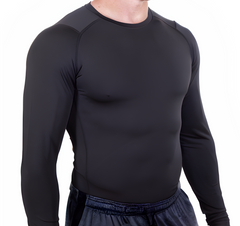
An Esteem Apparel compression shirt is not a hernia belt, a truss, or a medical device. It provides general, even compression across the torso and is worn as an everyday base layer under normal clothing. If you have an inguinal hernia, or you are weighing up a hernia belt, that is a conversation for your doctor or surgeon rather than a shopping decision.
Which of ours, if any
If your doctor is happy for you to wear light support, the Max Compression Tank and the UltraSlim give even, garment-level abdominal coverage in a breathable everyday layer. They are suitable for umbilical and upper-abdominal sites that a shirt actually covers. Shirts do not reach inguinal hernias at the groin, and we would rather say so than sell you one.
Fit should be your true measured size from the size guide. With a hernia, never size down for extra pressure.
Hernia FAQs
Can a compression shirt heal my hernia or stop it growing?
No. Surgery is the only repair, and no garment reliably prevents a hernia from enlarging. Support wear is about comfort and appearance during a medically agreed waiting period, nothing more.
Is it safe to wear compression over a hernia?
For most small, reducible, doctor-assessed hernias, light and even garment-level compression is fine and often feels good. Ask your own doctor, because hernias differ. Stop wearing it and get checked if you notice new pain, or if the bulge changes character.
Will a shirt help an inguinal (groin) hernia?
Honestly, not much. Shirts end at the hips and do not apply meaningful support at the groin. Inguinal support is truss-and-doctor territory if it is needed at all. A compression shirt helps with umbilical and upper-abdominal sites it actually covers.
Do you sell hernia support underwear or briefs?
No. We make compression shirts and tanks. If you need groin or scrotal support, that is a different product category and a different conversation with your doctor.
What about after hernia surgery?
Follow your surgeon's instructions. Some prescribe an abdominal binder for the early weeks, some do not. Once you are cleared for normal clothing, an everyday compression layer can be a comfortable way to support the area as you return to full activity.
Disclaimer: this article is for information only and is not medical advice. Esteem Apparel garments are designed for comfort and appearance. They are not medical devices and are not intended to treat, cure or prevent hernias. Always consult a qualified healthcare professional about the diagnosis and treatment of any medical condition.


