




If you're dealing with gynecomastia — enlarged male breast tissue — you've probably developed habits most people never notice: arms crossed in photos, a hoodie in summer, a quiet dread of pool invitations. You're far from alone. Gynecomastia is one of the most common chest conditions in men, and most men who have it never pursue surgery. The good news: how your chest looks in clothes is mostly about clothing physics, and clothing physics can be worked with. Here are nine methods that genuinely help, starting with the most effective.
1. Wear a chest compression shirt
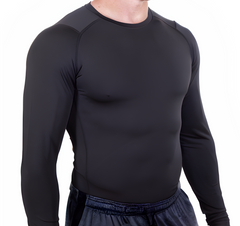
Nothing else on this list comes close. A purpose-built compression shirt flattens and evenly redistributes chest tissue, so the shirts you wear over it drape in a straight line from chest to stomach instead of catching and outlining. The effect is immediate — before/after in the mirror, same day.
Look for these features: a dedicated firm chest panel (not just uniform stretch fabric), flat seams that won't print through outer shirts, breathable moisture-wicking material, and a torso long enough to stay tucked. Our Original Gynecomastia Compression Shirt was designed around exactly these requirements, and the Max Tank offers a sleeveless version for hot weather.
2. Choose thicker, structured fabrics
Thin jersey cotton is the enemy: it clings and outlines. Midweight fabrics — oxford cloth button-downs, heavyweight cotton tees, waffle knits, flannel, twill overshirts — hold their own shape rather than tracing yours.
3. Use patterns and darker colors
Solid light colors show contours; patterns break them up. Vertical stripes, plaids, and textured weaves scatter the eye. Darker colors flatten shadows, which is what "makes things look smaller" actually means.
4. Get the fit right — not baggy
Counterintuitive but true: oversized shirts read as "hiding something" and billow against the chest, sometimes making it look larger. The right fit skims — fitted at the shoulders, straight through the body, with a bit of room at the chest. Tailoring a few favorite shirts costs little and changes everything.
5. Layer strategically
An open overshirt, unstructured blazer, or zip-up over a tee adds a vertical line down each side of the chest that interrupts its silhouette. Layers are the easiest instant fix when compression isn't an option.
6. Fix your posture
Rounded shoulders push the chest forward and down, exaggerating the problem. Pulling the shoulder blades gently back and down visibly flattens the chest line. Compression shirts help here too — the fabric tension is a constant, gentle posture reminder.
7. Mind the details: pockets, logos, and buttons
Chest pockets, large chest logos, and straining button plackets all draw the eye exactly where you don't want it. Choose pocket-free shirts, keep graphics low or absent, and make sure button-downs never pull at the chest (size up and tailor the waist instead).
8. For swimming: dark swim shirts
A dark, fitted (not tight) rash guard or swim tee is completely normal at any beach or pool — sun protection has made them mainstream. Wearing a compression shirt underneath a loose swim tee is a combination many men rely on.
9. Address the underlying causes where you can
If your gynecomastia is actually pseudogynecomastia (chest fat rather than glandular tissue), fat loss through diet and strength training can genuinely reduce it. True glandular gynecomastia doesn't respond to exercise, and certain medications, alcohol, and hormonal issues can contribute — worth a conversation with your doctor, both to understand your options and to rule out anything that needs attention.
The bottom line
You don't need surgery to feel comfortable in your clothes. Start with the biggest lever — a proper compression shirt — then stack the clothing tactics on top. Most men are surprised how much of the problem was never their chest at all, but the fabric sitting on it.
This article is for general information and isn't medical advice. If you've noticed new, painful, or one-sided breast tissue changes, see a doctor.


