




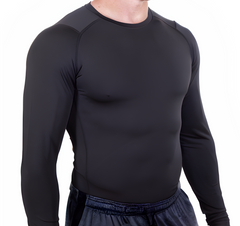

If you have started reading about gynecomastia, you have probably seen it described in grades, from grade 1 up to grade 3. Doctors use these grades to describe how much breast tissue has developed and whether there is excess skin, which helps guide treatment. Here is what each grade means in plain language.
Why grading exists
Grading gives doctors a shared, consistent way to describe the degree of gynecomastia. It captures two things: how much enlargement there is, and whether the skin has stretched enough to sag. Those two factors together shape what options make sense, so understanding your rough grade helps you understand the conversation.
Grade 1: mild
Grade 1 is a small amount of enlargement, usually a modest amount of tissue localized right around the nipple, with no excess skin. From the outside it often looks like slight puffiness or fullness behind the nipple. This is the mildest form, and it is frequently well managed with a compression shirt for a smooth appearance.
Grade 2: moderate
Grade 2 is a moderate degree of enlargement, more noticeable and spreading a little beyond the nipple area, but still without significant sagging skin. It is often split into two sub-levels: one where the tissue has grown but the skin has not stretched much, and one where there is the very beginning of some excess skin. Grade 2 is still commonly smoothed effectively by firm compression, though it is more noticeable than grade 1.
Grade 3: marked
Grade 3 is marked enlargement with clear excess skin, where the chest more closely resembles a fuller breast shape with some sagging. At this grade the skin itself has stretched, which is why compression can still improve the appearance but skin looseness becomes part of the picture. Established grade 3 cases are the ones most often addressed surgically when a permanent change is the goal.
What your grade means for your options
As a general pattern, the lower grades respond very well to compression for an immediate smooth look, and compression remains a useful confidence tool at every grade. As the grade rises and excess skin enters the picture, surgery becomes a more common route for men who want a permanent result. But grade is only one factor. How long the gynecomastia has been present and what is causing it matter just as much, which is why a proper assessment is worthwhile.
Get a proper assessment
Grading yourself from photos online is imprecise. A doctor can assess your grade accurately, check whether the tissue is glandular or fatty, and help you understand your realistic options. Use these grades to understand the language, not to self-diagnose.
Whatever your grade, a compression shirt offers an immediate, discreet way to flatten the chest and feel more confident. Explore our men's chest compression shirts to find the right fit for you.
This article is general information, not medical advice. A qualified doctor can accurately assess your grade and advise on the best options for you.


