




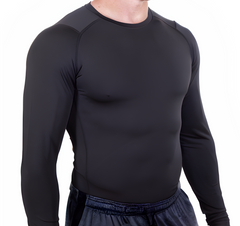

A compression shirt only does its job when it fits correctly. Too loose and it does nothing; too tight and you will not want to wear it. The good news is that getting the fit right is simple once you know what to look for, and caring for the garment so it keeps its shape is just as easy. Here is everything you need to know.
How a compression shirt should fit
A well-fitted compression shirt feels snug and supportive across the chest and torso, but never painful. You should feel firm, even pressure that flattens and holds, while still being able to breathe comfortably and move your arms freely. It should sit flat against your skin with no rolling at the hem, no digging at the shoulders, and no gaping at the neckline.
A few quick signs the fit is wrong: if the shirt rides up or rolls down at the waist, it is likely too small. If it feels loose enough to pinch away from your body, or the chest still moves freely, it is too large and will not give you the smoothing effect you are after. If it leaves deep red marks or makes breathing feel restricted, size up.
Measuring for the right size
Do not guess from your usual t-shirt size. Compression garments are designed to fit closer than regular clothing, so your everyday size can be misleading. Instead, take a soft measuring tape and measure around the fullest part of your chest, keeping the tape level and snug but not tight. Measure your waist the same way. Then compare both numbers to the size chart on the product page rather than relying on small, medium, or large alone.
Choosing your compression level
Not all compression is the same. Lighter compression is comfortable for all-day wear and gives a smooth, natural line under clothing. Firmer compression gives a stronger flattening effect and more support, which many men prefer for chest smoothing, but can feel more noticeable at first. If this is your first compression shirt and you are unsure, a medium-to-firm level is the usual sweet spot: enough to see and feel a real difference, without being a struggle to put on.
What to do if you are between sizes
Being between two sizes is common. As a rule, if you want maximum smoothing and firm support, size to the measurement the chart recommends even if it feels snug, since compression fabric gives slightly with wear. If your priority is all-day comfort, sizing up a little is reasonable. And because fit is personal, the safest approach is to order the chart-recommended size first. If it is not right, exchanges are free, so you are never stuck with the wrong fit.
Getting used to it
The first few times you wear a compression shirt, the firm pressure can feel unfamiliar, especially if you chose a firmer level. This is normal and eases quickly. Start by wearing it for a few hours at a time for the first couple of days, and you will adjust within a week. If at any point it causes numbness, pins and needles, or genuine difficulty breathing, take it off and try a looser fit or a larger size.
Wearing it under clothing
A good compression shirt is designed to be invisible under everyday clothes. The lightweight, breathable fabric lies flat with no bulky seams, so it disappears under t-shirts, dress shirts, and polos. For the most discreet look, choose a colour close to your skin tone under light-coloured shirts, and a darker shirt version under dark clothing.
Washing and caring for your compression shirt
Compression fabric relies on elastic fibers to hold its shape, and a little care keeps those fibers working for a long time:
- Machine wash cold on a gentle cycle, or hand wash. Hot water breaks down elastic fibers.
- Skip the fabric softener. It coats the fibers and reduces compression over time.
- Never use bleach.
- Hang to dry, or tumble dry on low or no heat. High heat is the fastest way to ruin compression.
- Wash after every one or two wears to remove body oils and sweat, which also degrade the fabric.
How long it lasts and when to replace it
With proper care, a quality compression shirt holds its shape for a long time, but no compression garment lasts forever. When you notice it going on more easily than it used to, or the flattening effect fading, the fibers have relaxed and it is time to replace it. Many men keep two or three in rotation so each one is washed less often and lasts longer.
A note on wearing one after surgery
If you are recovering from chest or gynecomastia surgery, follow your surgeon's specific guidance on compression first. Post-surgical compression needs are different from everyday shaping, and your surgeon may recommend a particular garment, pressure, and wearing schedule during healing. Always check with them before switching to an everyday compression shirt.
Once you have the fit and care right, a compression shirt becomes one of the simplest confidence tools in your wardrobe. Browse the full range of men's chest compression shirts to find the right fit and compression level for you.


