





One of the most common questions we hear is simple: "What size should I order?"
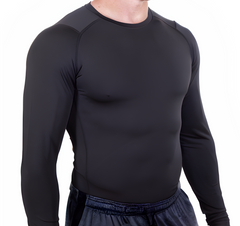
It seems straightforward, but fitting compression garments is different from fitting regular clothing. A compression shirt that's too large won't provide the support and benefits you're looking for. One that's too small will be uncomfortable and potentially restrictive.
Getting the fit right is crucial. This guide walks you through everything you need to know about sizing, fitting, and maintaining your compression garments.
Why Compression Fit Matters More Than Regular Clothing
With a regular t-shirt, if the fit is slightly off, you can usually make it work. A compression garment is different. Compression only works when the garment fits properly and maintains consistent pressure across the target areas.
Think of it like a sports bra for women—there's a reason sizing is taken seriously. The same principle applies to men's compression shirts.
Taking Your Measurements
The most important step is accurate measurement. Here's how to do it properly:
Chest Measurement
- Wear a fitted (not tight) undershirt or go shirtless
- Wrap a soft measuring tape around your chest at the fullest point
- The tape should be snug but not tight—you should be able to fit one finger under it
- Keep the tape parallel to the ground
- Take the measurement at the end of a normal exhale
- Write down the measurement to the nearest half-inch
Torso Length (for longer compression shirts)
- Measure from the top of your shoulder (where the arm meets the torso)
- Run the tape down the front of your body to your hip bone
- This determines whether you need a regular or extended length
Shirt Length Preference
- Look at how long your regular undershirts are
- Do they tuck in, or do they stay untucked?
- This affects which compression style works best for you
Sleeve Length (for compression shirts with sleeves)
- Let your arm hang naturally at your side
- Measure from the center of your back, across your shoulder, down to your wrist bone
- Note this measurement
Understanding Sizing Standards
Most compression manufacturers use these general size categories:
Small (S): Chest 34-37 inches
Medium (M): Chest 38-41 inches
Large (L): Chest 42-45 inches
X-Large (XL): Chest 46-49 inches
2X-Large (2XL): Chest 50-53 inches
3X-Large (3XL): Chest 54+ inches
However, these are general guidelines. Always check the specific manufacturer's sizing chart, as there can be variation between brands and styles.
The Fit Test: How Compression Should Feel
Once you receive your compression garment, here's how to evaluate if it fits correctly:
The Pressure Test
- The garment should feel firm but not painfully tight
- You should be able to breathe normally and take deep breaths
- You should be able to fit two fingers under the waistband
- There should be no rolling, bunching, or gaps
The Comfort Test
- Wearing it should make you feel supported and secure
- It should not dig into your skin or create painful pressure points
- After 30 minutes of wear, you shouldn't have red marks that don't fade within a few minutes of removal
- It should feel better than your regular undershirt, not worse
The Visual Test
- Under a fitted shirt, the garment should create a smooth, streamlined silhouette
- There should be no visible lines, seams, or bulges
- Your regular clothing should fit normally over it (not tighter than before)
The Movement Test
- You should be able to move your arms freely
- Bending and twisting should feel natural
- You should be able to sit comfortably at a desk or in a car
- Physical activities (walking, climbing stairs) should feel supported, not restricted
Common Fit Issues and Solutions
Too Loose
Problem: The garment slides down, doesn't provide adequate support, or creates visible bunching under clothing.
Solutions:
- Try a smaller size
- Consider a different cut or style with a tighter fit
- Check that you're wearing it correctly (no twists or folds)
- Use a size-down strategy if between sizes
Too Tight
Problem: The garment is uncomfortable, restricts breathing, or creates visible skin marks.
Solutions:
- Try a larger size
- Ensure you measured correctly (many people accidentally measure too tight)
- Check that you're not layering too much underneath
- Give it 2-3 wears before deciding—compression fabric needs a brief break-in period
Fits in Chest But Loose in Waist
Problem: The chest area fits well, but the waist is too loose and the garment shifts down.
Solutions:
- Look for styles with elastic waistbands or built-in waist support
- Try body-shaper styles that offer more comprehensive compression
- Consider wearing a belt with longer styles
- Some styles come in "contoured" fits designed for this issue
Fits in Waist But Loose in Chest
Problem: The waist fits perfectly, but the chest area is baggy or doesn't provide adequate support.
Solutions:
- Try a smaller size (chest sizing is the priority for most styles)
- Look for styles specifically designed for your body type
- Consider shorter-cut styles if you're between sizes
- Contact customer service for recommendations
Uncomfortable Neckline
Problem: The neckline is too high and shows above your shirt, or too low and creates a gap.
Solutions:
- Choose a crew-neck style for under dress shirts
- Try a v-neck for more casual wear
- Ensure you're not pulling it too high when putting it on
- Consider a scoop-neck for athletic wear
Sizing by Body Type
While compression works for all body types, certain styles work better depending on your build:
Athletic Build
- Standard sizing usually works well
- Look for ergonomic designs that account for muscle development
- Consider longer lengths to prevent riding up
- Sleeveless or short-sleeve options typically work best
Heavier Build
- Consider extended sizing or X-Large and up
- Look for graduated compression with extra support in high-impact areas
- Ensure adequate chest and waist measurement—don't just rely on one
- Full-coverage styles with waist support prevent shifting
Lean Build
- Standard sizing should work, but check chest measurement carefully
- Avoid oversized styles that won't provide adequate compression
- Fitted styles (not loose) will serve you better
- Consider whether you need extra length to prevent riding up
Tall Build
- Always check torso length—standard lengths may be too short
- Extended-length options prevent riding up during activity
- Longer shirt lengths maintain proper positioning throughout the day
- Ensure sleeve length is adequate for long-sleeve styles
Breaking In Your Compression Shirt
The first wear is important. Here's how to ensure a smooth adjustment:
Day 1
Wear your compression shirt for 1-2 hours in a low-activity setting (working at home, relaxed evening). This allows your body to adjust to the new garment and helps you identify any fit issues.
Days 2-3
Increase wear time to 4-6 hours. Wear it during normal daily activities—work, casual outings, household tasks.
Days 4-7
By this point, most people are comfortable wearing compression for 8-12 hours daily. Full-day wear is normal once you're acclimated.
Ongoing
Some people wear compression 24/7 (removing only for bathing and laundry), while others wear it only during work hours or specific activities. Find what works for your lifestyle.
Maintenance & Care
Proper care extends the life of your compression garment:
Washing
- Wash in cold water with gentle detergent
- Use a washing machine on delicate cycle, or hand wash
- Avoid bleach and fabric softener
- Don't wring or twist—gently squeeze out water
- Air dry only—never use a dryer, as heat damages the compression fibers
Storage
- Store flat or gently folded in a drawer
- Avoid hangers, which can stretch the fabric
- Keep away from direct sunlight
- Store in a cool, dry place
Frequency
- Plan to wash after every 2-3 wears, or when visibly soiled
- Consider having 2-3 compression shirts in rotation so one is always clean and available
- Quality compression shirts last 6-12 months with proper care
Return & Exchange Policy
Even with careful sizing, sometimes a garment just doesn't fit right. Good companies offer:
- Try-before-you-commit periods (typically 30 days)
- Free returns or exchanges for fit issues
- Helpful sizing support if you're unsure what size to order
Don't settle for an uncomfortable fit. If something doesn't work, contact customer service. A properly fitting compression shirt is worth the effort to get right.
Pro Tips for Perfect Fit
- Measure twice, order once – Accurate measurement is everything
- Be honest about your body – Round up if between sizes; compression needs to be snug
- Consider your use case – Athletic wear, office wear, and medical applications might require different fits
- Give it time – Most fit complaints disappear after 3-4 wears
- Buy quality – Better brands use better elastic that maintains compression through many washes
- Have backups – If you love it, get two. Rotation extends garment life
- Read reviews – Check what others with similar body types say about fit
Conclusion
Getting the right fit in compression wear isn't complicated, but it does require attention to detail. Take your measurements accurately, choose your size based on chest measurement, and don't be afraid to contact customer service if you're unsure.
A properly fitting compression shirt will feel like a natural extension of your body—supportive, comfortable, and invisible under your regular clothing. And when it fits right, you'll understand why so many men consider compression wear an essential part of their daily routine.
Your perfect fit is out there. It just takes a little care to find it.


